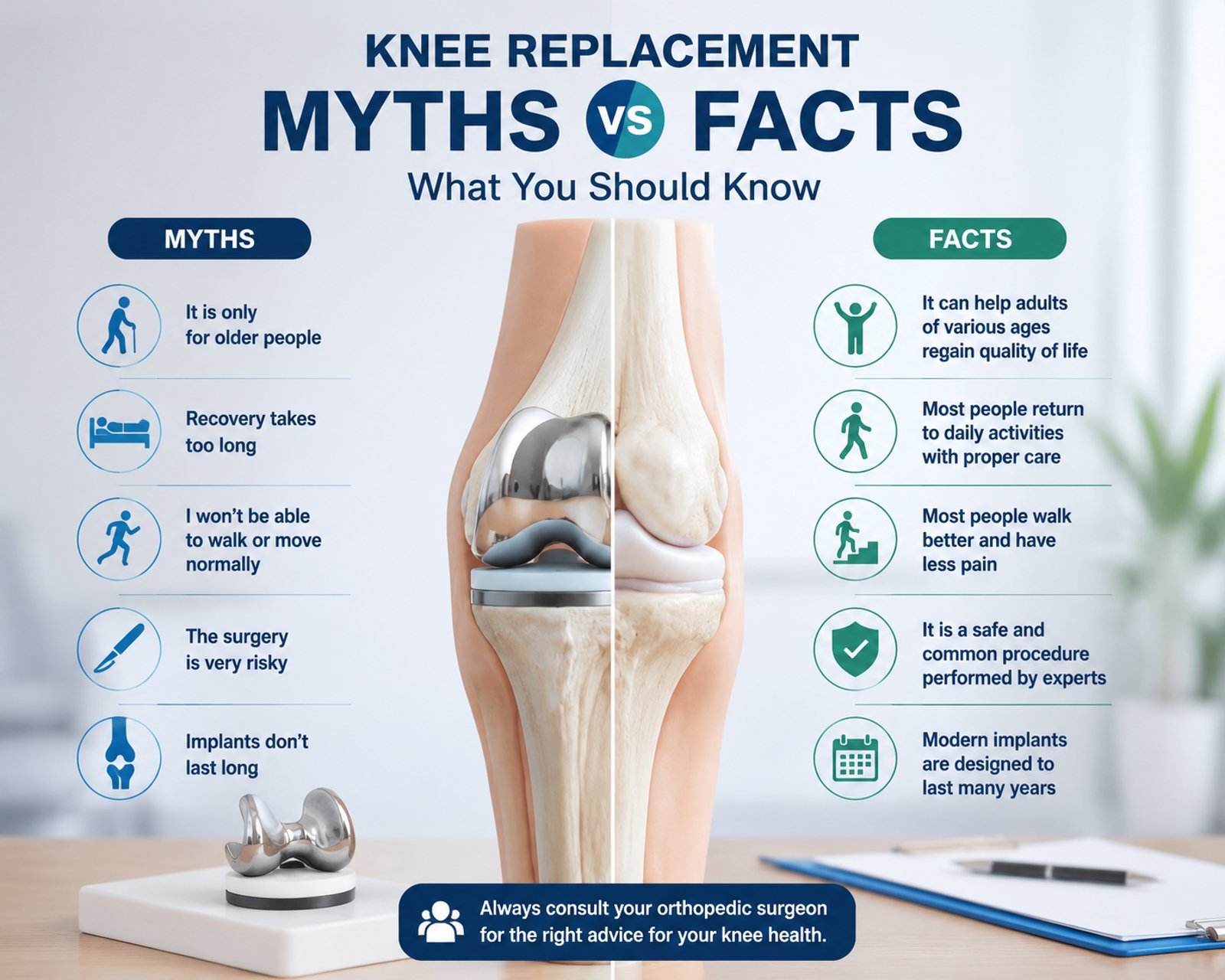
Knee Replacement Myths vs Facts: What You Should Know

Knee replacement myths vs facts can confuse many people. Because of this, it is important to know what is true and what is not. Many people worry about knee replacement surgery due to stories they have heard. However, understanding the truth about knee replacement helps you make better choices for your health. In this blog, we will clear up common myths and share real facts about knee replacement surgery.

What Is Knee Replacement?

Knee replacement is a surgery that helps people with severe knee pain. Usually, doctors suggest it when other treatments do not work. During the surgery, the damaged parts of the knee are replaced with artificial parts. As a result, many people feel less pain and can move better. This surgery is common and has helped millions of people worldwide. According to the World Health Organization, knee replacement is safe and effective for most patients.

Common Myths About Knee Replacement

There are many knee replacement surgery misconceptions. Let’s look at some of the most common myths:

  • Myth 1: Knee replacement is only for older people.
  • Myth 2: You will not be able to walk normally after surgery.
  • Myth 3: The artificial knee will not last long.
  • Myth 4: Surgery is very risky and unsafe.
  • Myth 5: Recovery takes a very long time.
  • The Facts: Setting the Record Straight

    Now, let’s look at the truth about knee replacement. For each myth, we will share the real facts:

  • Myth 1: Knee replacement is only for older people.
  • Fact: While many patients are older, younger people with severe pain can also benefit. Doctors decide based on pain and how much it affects daily life, not just age. (Source: CDC)
  • Myth 2: You will not be able to walk normally after surgery.
  • Fact: Most people walk with help soon after surgery. With physical therapy, many return to normal activities within weeks. (Source: American Academy of Orthopaedic Surgeons)
  • Myth 3: The artificial knee will not last long.
  • Fact: Modern knee implants can last 15 to 20 years or more. Good care and regular check-ups help them last even longer. (Source: PubMed)
  • Myth 4: Surgery is very risky and unsafe.
  • Fact: Like any surgery, there are risks. However, knee replacement is considered safe for most people. Doctors check your health before surgery to lower risks. (Source: WHO)
  • Myth 5: Recovery takes a very long time.
  • Fact: Many people start moving the same day or the next day after surgery. Most can do daily tasks within a few weeks. Full recovery may take a few months, but improvements start early. (Source: CDC)
  • How to Prepare for Knee Replacement Surgery

    Proper preparation can help you feel ready for surgery. For example, you can:

  • Talk to your doctor about your health and medicines
  • Arrange help at home for the first few days
  • Set up your home to avoid falls
  • Follow your doctor’s advice about eating and drinking before surgery
  • Practice gentle exercises to keep your muscles strong
  • Because preparation is key, always ask your doctor if you have questions. This will help you feel more confident on the day of surgery.

    Recovery and Life After Knee Replacement

    After surgery, recovery is important. Usually, you will start moving your knee soon. Physical therapy helps you regain strength and movement. In fact, most people notice less pain and better movement within weeks. Here are some knee replacement recovery facts:

  • Most people walk with help within a day or two
  • Many return to daily activities in 4 to 6 weeks
  • Full recovery can take 3 to 6 months
  • Regular exercise and follow-up visits help you heal faster
  • However, everyone heals at their own pace. Always follow your doctor’s advice for the best results.

    When to Consult an Orthopedic Surgeon

    If knee pain stops you from enjoying life, it may be time to see a specialist. For example, you should consult an orthopedic surgeon if:

  • Pain keeps you awake at night
  • You cannot walk or climb stairs easily
  • Other treatments, like medicine or therapy, do not help
  • Your knee looks swollen or feels unstable
  • Because every person is different, only a doctor can tell if knee replacement is right for you. Early advice can help you plan the best care for your needs.

    In summary, knowing the truth about knee replacement helps you make better choices. If you have questions or concerns, consult Dr Gaurav Khanted  for personalized advice.